
- Free
- 71 pages
- 10 categories
Discover the next
generation of residential real estate.
25+ sub-asset classes, from shadow-market student housing to Medicaid-backed group homes to 99-year residential ground leases. Where each niche stands today, why it is growing, and the operators and investors building it.
The report opens the moment you enter your email.
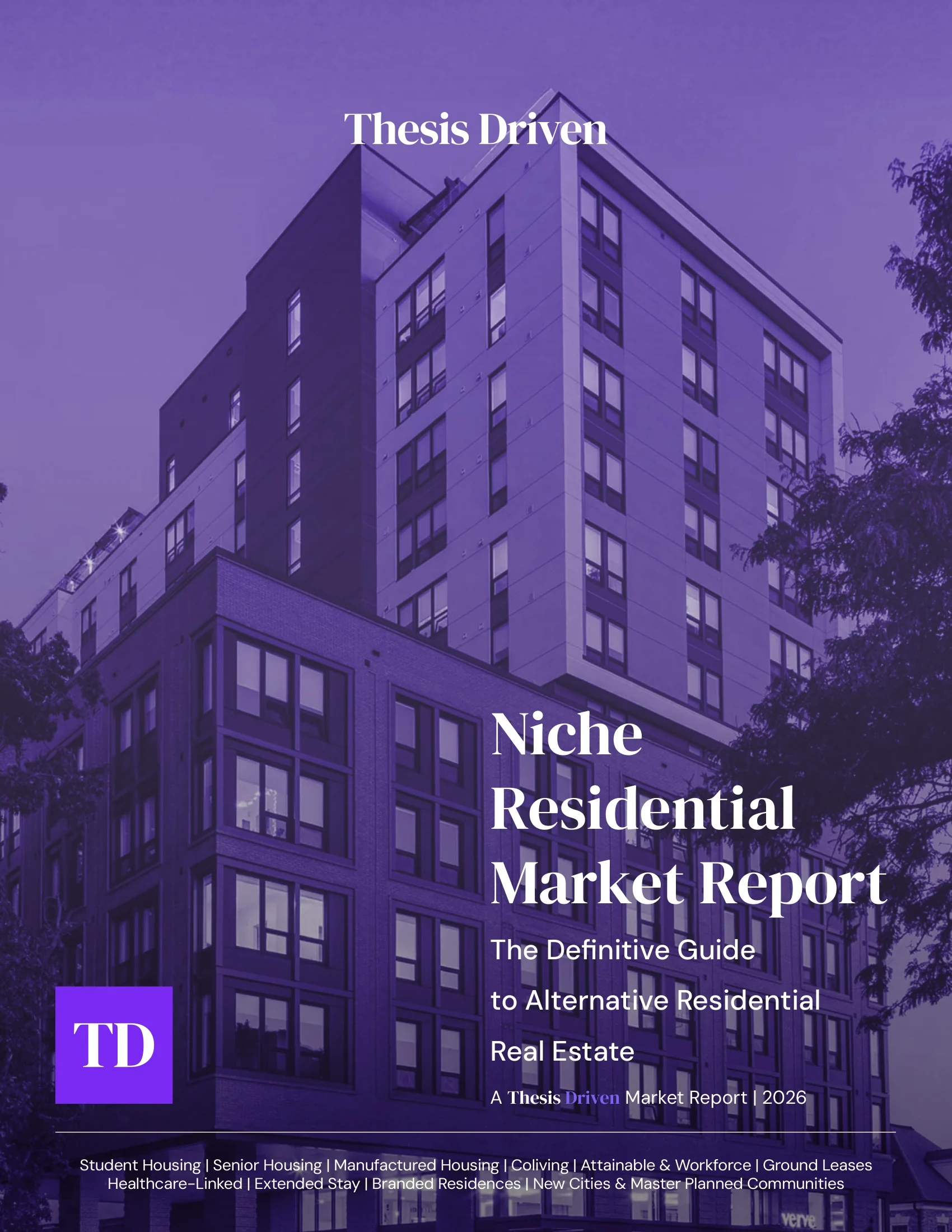
Why now
The one-product decade is over
For much of the last two decades, institutional housing largely meant one product: Class A garden or mid-rise apartments in Sun Belt growth markets, financed with agency debt and underwritten on the assumption of annual rent bumps.
Today that strategy is crowded, and the returns show it.
Conventional cap rates now sit close to the ten-year Treasury. The complexity premium in niche residential is still intact.
What counts as niche
Change one term of the traditional lease
We define niche residential as housing where at least one factor of the conventional one-household, one-year lease has changed.
Who pays
- Conventional
- The household
- Niche
- Parents, retirees, employers, universities, insurers, Medicaid, HUD, etc.
What is leased
- Conventional
- An apartment unit
- Niche
- A bed, a room, a lot, a house, etc.
For how long
- Conventional
- Twelve months
- Niche
- A night, week, month, quarter, year, 99 years, etc.
Change any of the above factors and the asset becomes harder to source, underwrite, operate and finance.
Inside
Ten categories
From fully institutional sectors with public REITs to niches that barely have transaction data.
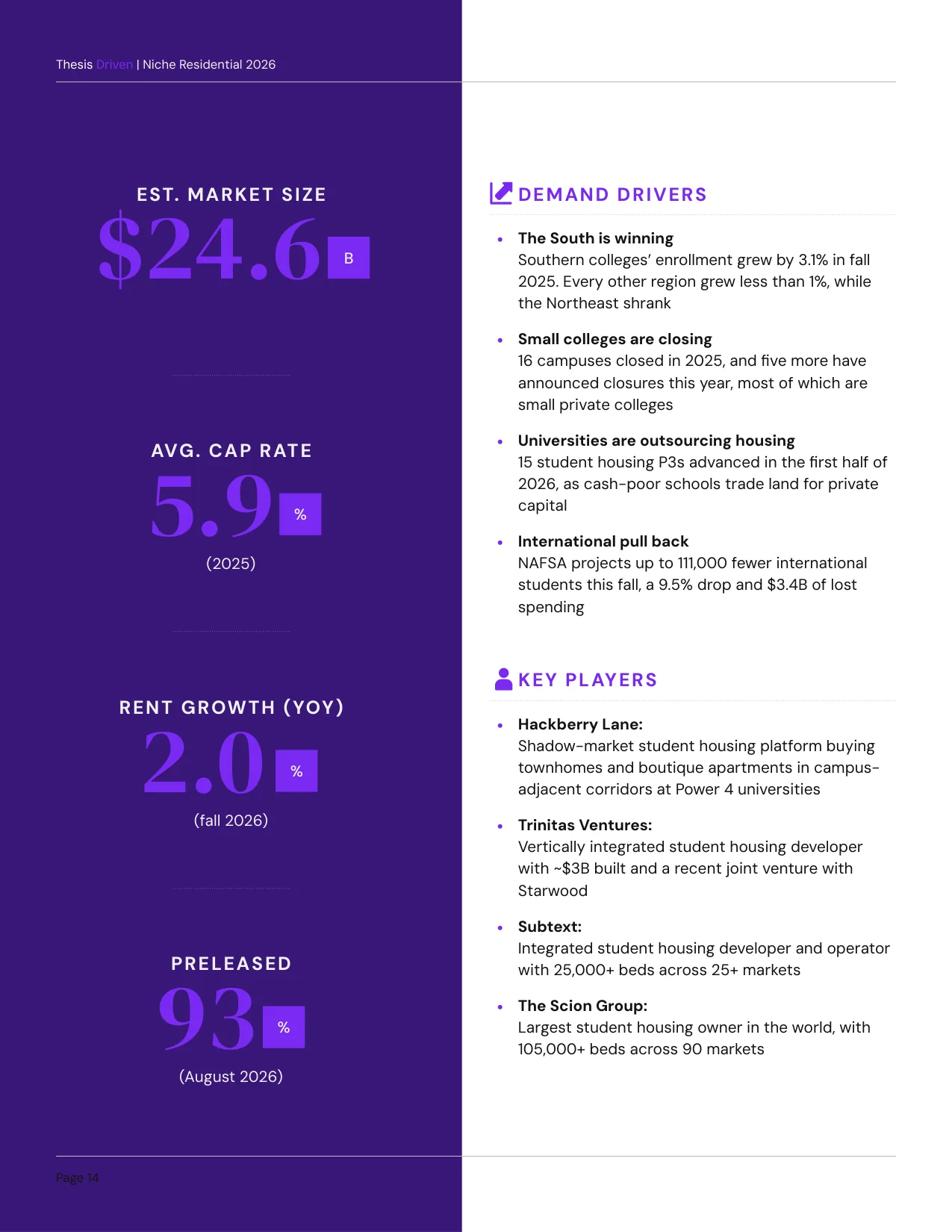
- 01Student HousingState universities are absorbing the students small colleges are losing, faster than anyone can house them. 93% of off-campus beds were leased before classes began.
- 02Active Adult & Age-RestrictedRetirees who prefer a clubhouse to a caregiver have almost nothing new to rent. Openings fell from about 7,000 units a year to 1,000 in the first half of 2026.
- 03Manufactured HousingOne of the last sources of naturally occurring affordable housing in America — and with most of the sector still in mom-and-pop hands, the consolidation has only started.
- 04ColivingMost of the venture-backed first wave shut down or sold. The operators rebuilding it pitch affordability, and own or manage their buildings instead of master-leasing them.
- 05Attainable & Workforce HousingOperators are renovating older Class B and C buildings and tapping expanded tax credits and renewed Section 8 contracts, as the middle gets squeezed.
- 06Ground Lease StructuresTraditionally reserved for commercial real estate, ground leases are moving into housing — letting buyers finance the house without owning the land beneath it.
- 07Healthcare-Linked ResidentialThe waitlist for Medicaid-funded home and community care is past 600,000 people. Deliver the homes and you get a Medicaid-funded tenant and a queue of residents.
- 08Extended StayConstruction crews and displaced families need somewhere to live by the week. The standout of the lodging industry: hotel revenue with apartment-like staffing.
- 09Branded & Lifestyle ResidentialFrom Four Seasons to Aman, hospitality brands are putting their names on homes that sell at a 33% premium and help fund the hotels next door.
- 10Master Planned Communities & New CitiesBranded residential sells a lifestyle one home at a time; master planned communities sell it at the scale of a town, as homebuilders shed land.
71 pages
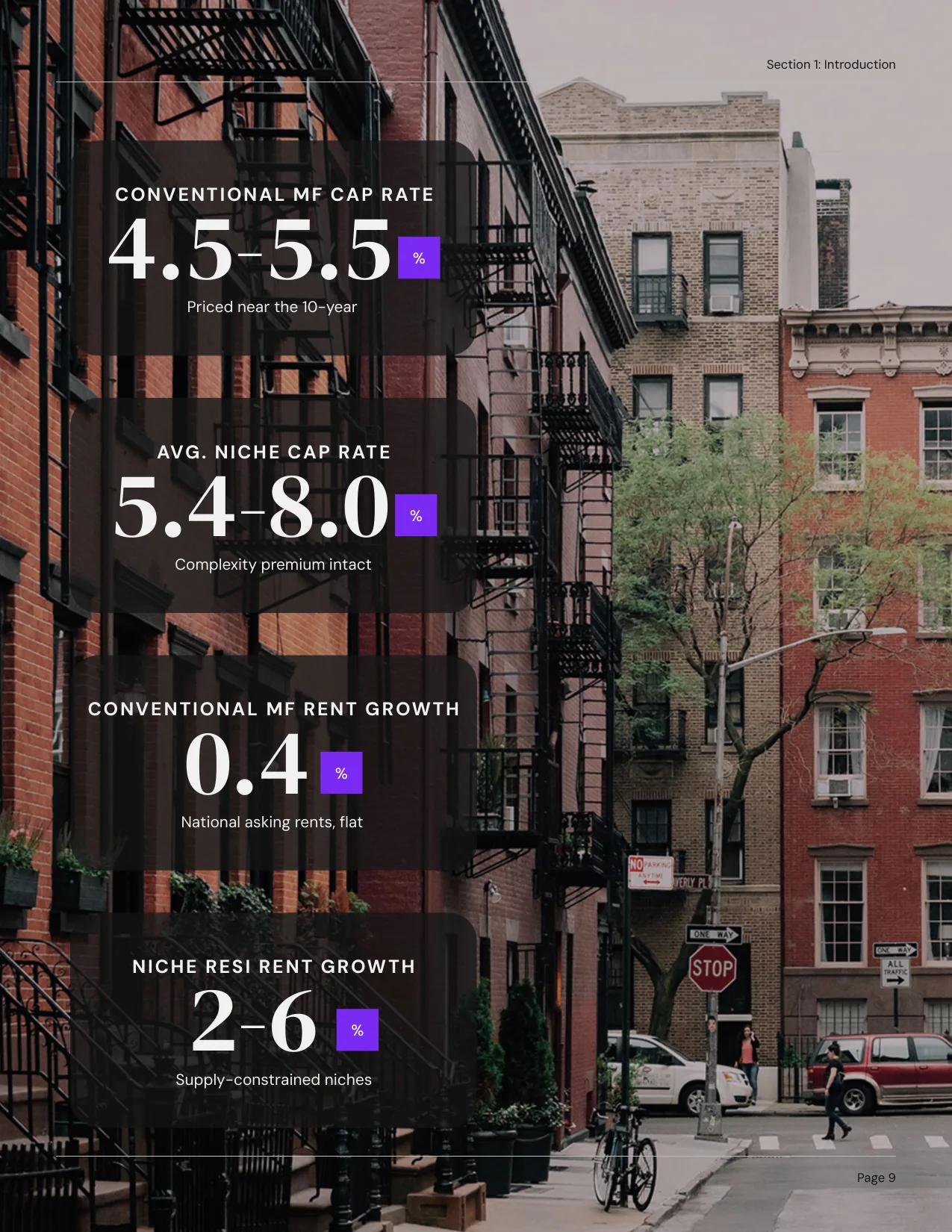
Built to be used, not skimmed
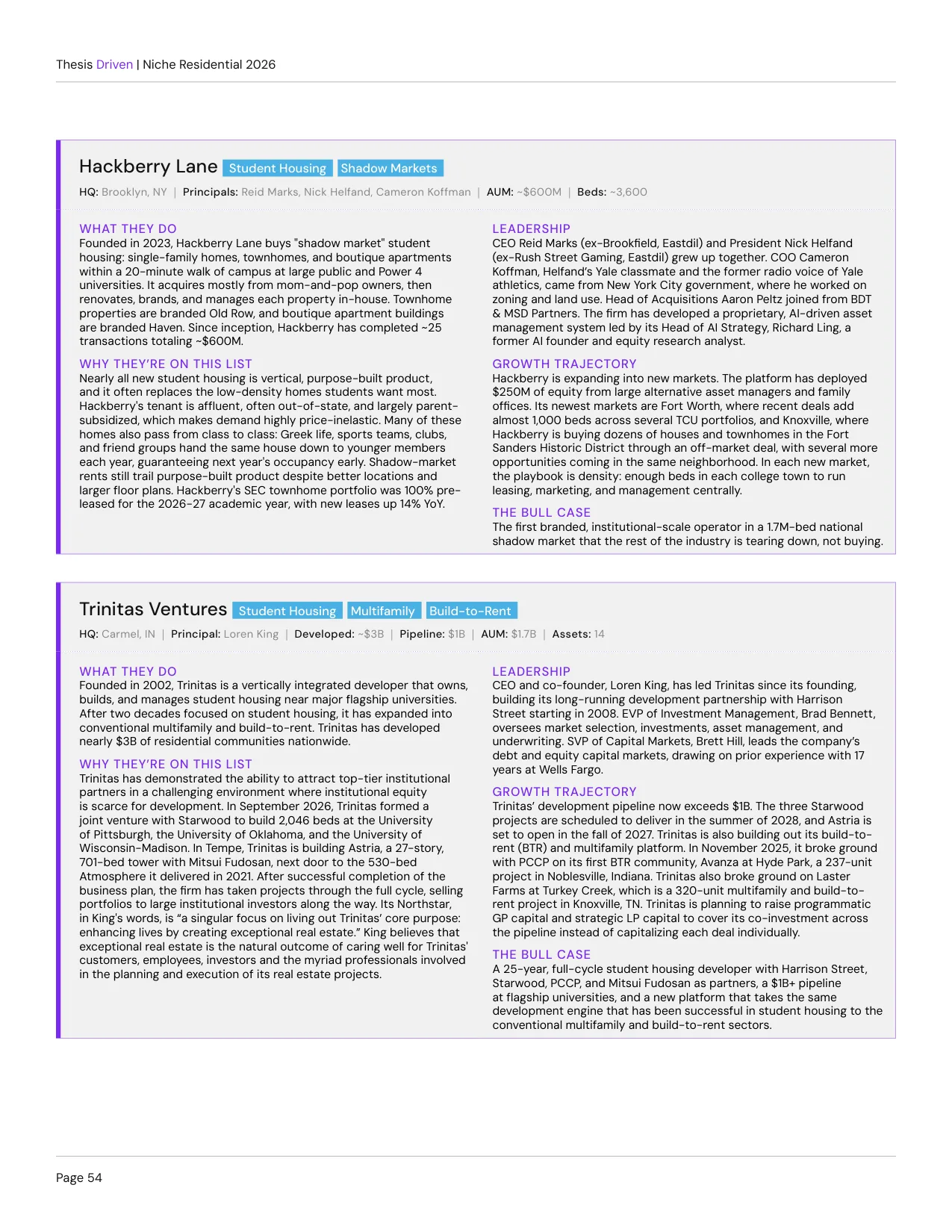
Every category gets its market size, cap rate and demand drivers on one page, then the operators building it, profiled.
Get a free copy
The full report profiles the operators and investors in each category, and ends with our view on which niches are ready for institutional capital and which are not yet.